The Nine Realms
Norse mythology through the lens of God of War
Norse mythology is one of the oldest and most documented mythological traditions in the world, but most people encounter it filtered through some kind of adaptation — movies, novels, or in my case, video games. God of War (2018) and God of War: Ragnarök (2022) are set entirely within the Nine Realms of Norse cosmology, and they do something unusual for a big-budget game: they take the source material seriously. The myths are not just set dressing. Characters, locations, creatures, artifacts, and events from the Prose Edda and Poetic Edda show up with their original names, their original functions, and in many cases their original stories — adapted, reinterpreted, or in some cases translated almost directly into gameplay.
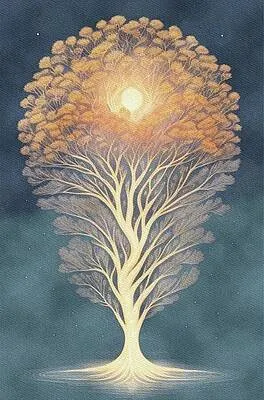
This project is a map of Yggdrasil, the World Tree that connects the Nine Realms, built around the question of how those adaptations work. Each realm introduces the mythological context first, then shows what God of War chose to do with it — what they kept, what they changed, and what those changes reveal about how we retell old stories. My focus is especially on the three deep realms at the roots of the tree — Jotunheim, Niflheim, and Muspelheim — because they represent the parts of Norse cosmology most often overlooked in popular culture, and because the games get them right in ways I did not expect.
Scroll down to begin at the top of the tree, where the Eagle watches from Asgard. The wyrm Níðhöggr waits at the bottom.
Asgard
Home of the Aesir gods — realm of the Eagle
Asgard sits at the highest branches of Yggdrasil, home to the Aesir gods and seat of Odin the Allfather. In Norse cosmology it is a walled fortress realm connected to Midgard by the rainbow bridge Bifröst, guarded eternally by Heimdall. Within its borders lie Valhalla — where warriors slain in battle feast and train for Ragnarök — and Valaskjálf, Odin's silver-roofed hall from which he watches all Nine Realms through the eyes of his ravens, Huginn and Muninn. In the God of War games, Asgard is never directly visited until the climax of Ragnarök, yet its shadow falls across every realm. Odin's paranoia shapes the politics of every world on the tree. His decisions to imprison Mimir, exile Freya, and exterminate the giants ripple outward into every story the games tell. When the final battle comes, Asgard is not saved — it is the target. Rather than the mutual slaughter the Eddas describe, the game reimagines Ragnarök as a revolution: the end not of all creation, but of Odin's iron grip on the Nine Realms.


Vanaheim
Ancient homeland of the Vanir gods
Vanaheim is the primordial home of the Vanir — an older, nature-aligned clan of gods distinct from the Aesir of Asgard. Where the Aesir represent war, law, and ambition, the Vanir embody fertility, the earth's cycles, and the deep magic of seiðr. The Aesir-Vanir War — one of Norse mythology's foundational conflicts, possibly encoding the historical collision of two religious traditions — ended in an uneasy peace and a hostage exchange: Freyr and Freya came to Asgard; Mimir and Hœnir went to Vanaheim. The Vanir were dissatisfied with their hostages, beheaded Mimir, and sent the head back to Odin, who preserved it with herbs and magic and continued consulting it for wisdom. In God of War: Ragnarök, Vanaheim is a major explorable realm depicted as a sprawling, overgrown wilderness of towering ancient trees, shifting seasons, and deep magic. Odin has occupied and exploited the land, but Freyr leads a guerrilla resistance in the undergrowth. Its lushness stands in vivid contrast to Asgard's cold authoritarianism, and reclaiming it is one of the game's most emotionally resonant arcs. Vanaheim is what the Nine Realms could be — and could still become — if freed from Odin's control.


Alfheim
Realm of the Light Elves — and the eternal civil war
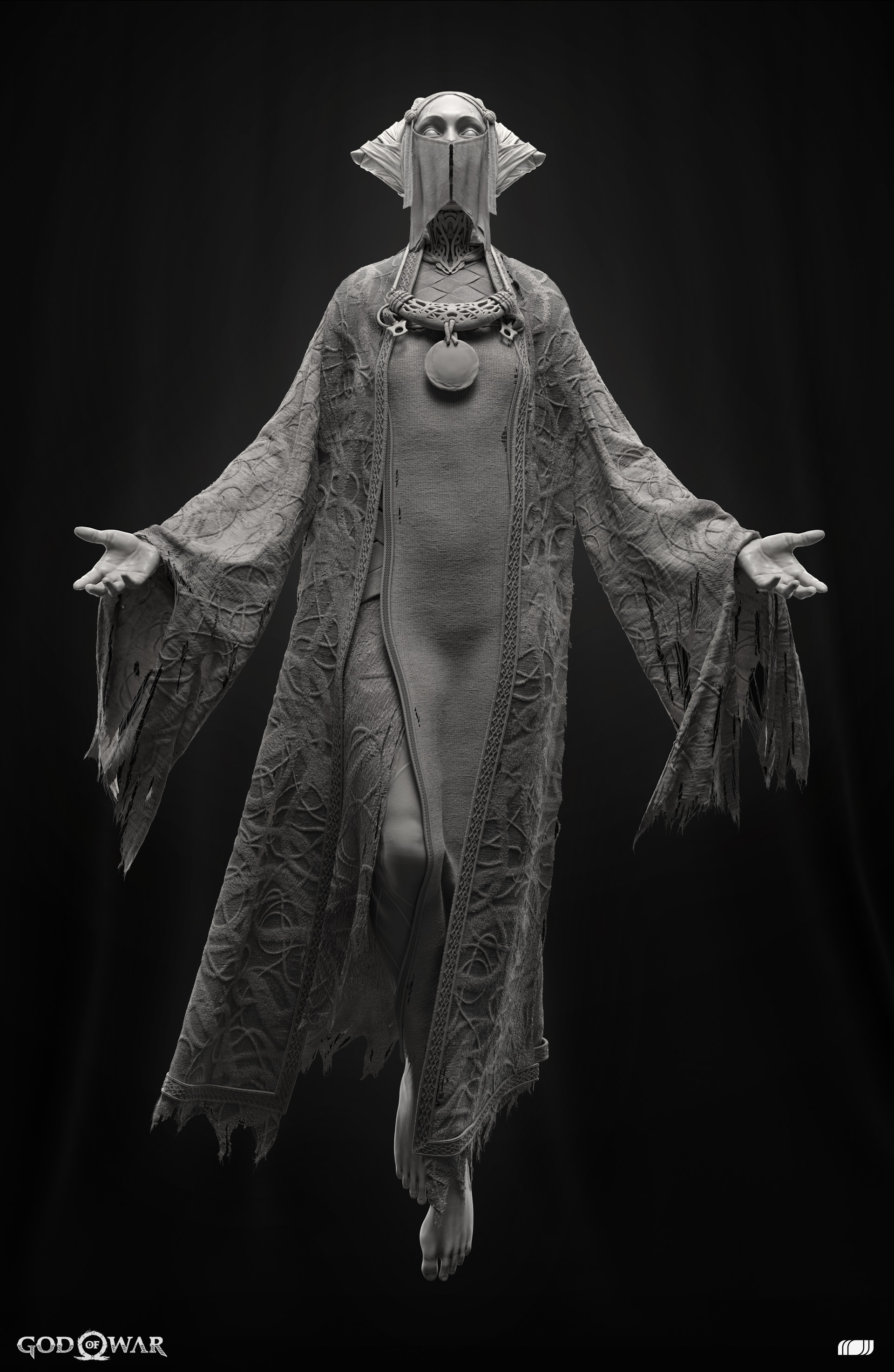
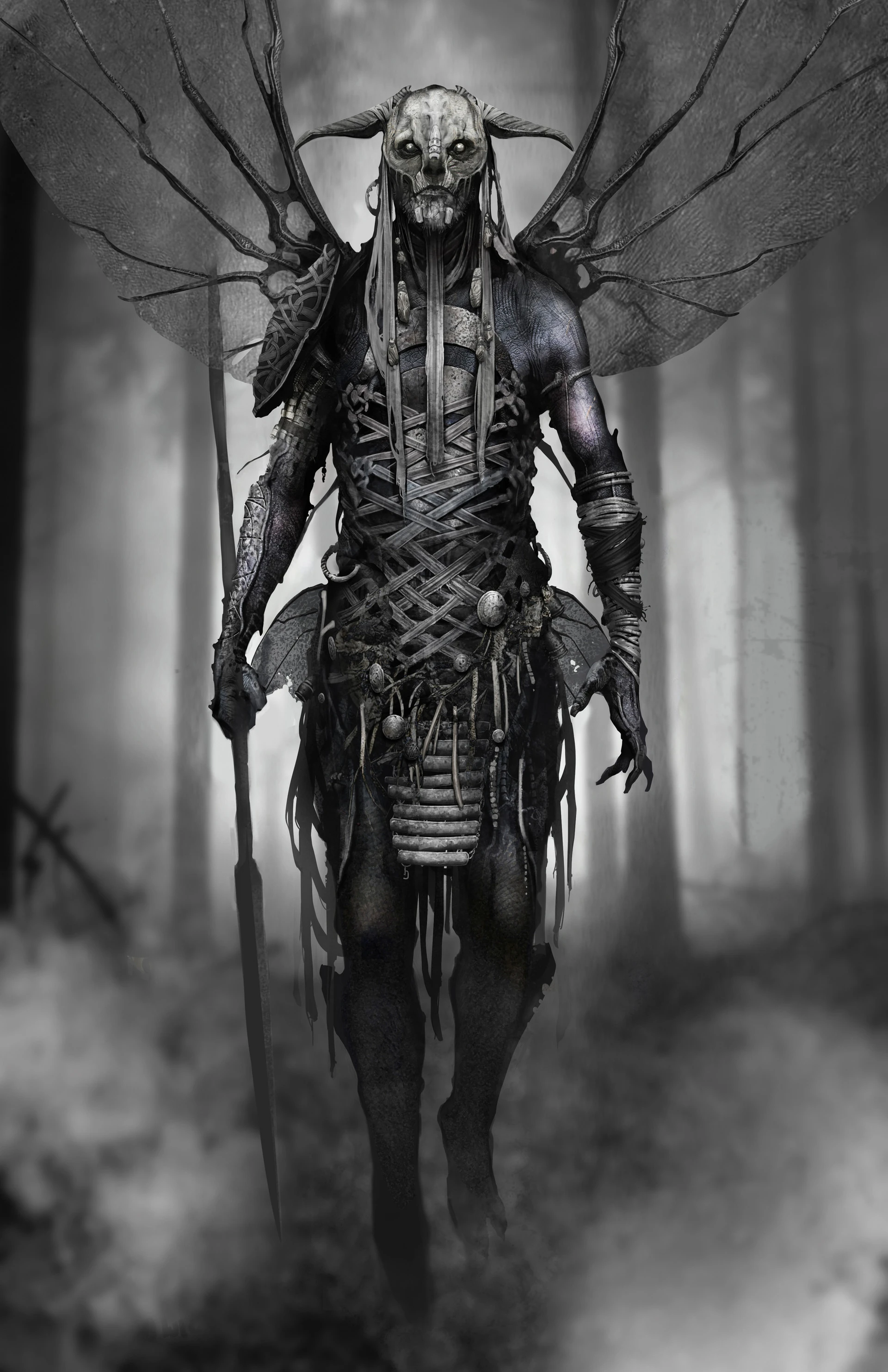
Alfheim, the realm of the elves, sits in the upper branches of Yggdrasil. In Norse cosmology the Light Elves (Ljósálfar) are described as brighter than the sun — radiant, ethereal beings dwelling in a realm of light and beauty. Their dark counterparts, the Dökkálfar, exist in opposition. Alfheim was given to the god Freyr as a tooth-gift at his first tooth, suggesting a realm of abundance under his domain. The Prose Edda gives precious little detail about either elf faction beyond this binary, leaving the realm as one of mythology's most open canvases. In God of War (2018), Alfheim is one of the first realms beyond Midgard that Kratos and Atreus visit, traveling there to retrieve the Light of Alfheim — a divine energy source needed to unlock the power of the Bifröst. What they find is a civilization in ruins: centuries of civil war between Light Elves and Dark Elves have hollowed the realm out. The game pointedly refuses to make the Light Elves simply good and the Dark Elves simply evil. Both factions have been brutalized by a war that has gone on so long its origins are forgotten — a consequence of divine abandonment that the game never lets the player ignore.
Midgard
The world of humans — heart of the World Tree
Midgard sits at the center of Yggdrasil — the middle world built for humankind, encircled by the vast ocean in which Jörmungandr coils and bites his own tail. In Norse cosmology it was constructed from the body of the primordial giant Ymir: his flesh became the earth, his blood the sea, his skull the sky. The gods built a great wall around it from Ymir's eyebrows to keep the giants out. At its center stands Tyr's Temple, built by the god of justice as a monument to peace and inter-realm travel, now half-submerged in the Lake of Nine. Midgard is the central hub of God of War (2018), and the Lake of Nine — a body of water whose level rises and falls with the World Serpent's movements — serves as its nexus. Here an exiled Greek god named Kratos has made his home in the woods, and it is from here that he and his son Atreus begin a journey that will unsettle the entire cosmological order. Midgard is where myth meets mortal ground — where the ancient machinery of fate is first set in motion by people who do not yet understand what they are part of.


Jotunheim
Realm of the Giants — homeland of the Jötnar
Jötunheimr is the domain of the giants — the Jötnar — primordial beings who predate the Aesir and represent the wild, untamed forces of the natural world. They are not simply oversized humans; they are chaos personified, the nature that the gods are always working to contain. Many Aesir gods, including Odin, Thor, and Loki, carry Jötunn blood. Their power is the power of frost, mountain, tide, and flame. Jotunheim in God of War (2018) is the destination of the entire game — the summit of the highest peak in all the Nine Realms, where Kratos and Atreus must scatter Faye's ashes as she requested. The journey there takes the full length of the game, crossing multiple realms and confronting every obstacle Odin places in their path. When they finally arrive, the truth reveals itself: the murals covering Jotunheim's interior were painted by the giants as a prophetic record — depicting, in precise detail, every moment of the journey Kratos and Atreus have just completed. The giants knew. They planned for this. The realm is not just a destination; it is an archive of the future, drawn by a people who could foresee their own extinction and still chose to act.

Niflheim
The primordial realm of ice and mist
Niflheim — Mist Home — is one of the two original realms in Norse cosmology, existing before the gods, before the giants, before anything. In the beginning there was only Niflheim's cold and Muspelheim's fire, separated by the great void Ginnungagap. Where they met, the ice melted from Muspelheim's heat, and from that warmth the first being — Ymir — condensed into existence. From Ymir came the giants; from a giant came the gods; from the gods came the ordering of the world. Niflheim is the origin point of everything. It contains Hvergelmir, the great spring from which eleven rivers flow outward across the cosmos, and it is here that the roots of Yggdrasil descend deepest. In God of War (2018), Niflheim is depicted as a cursed, labyrinthine realm filled with a lethal toxic mist generated by Ivaldi's forgotten workshop. Players must navigate its corridors before the mist kills them. It is a realm that has been hostile since before memory — not as punishment, but as its nature. The cold here is not malice. It is simply what Niflheim is.
Muspelheim
The primordial realm of fire — birthplace of the world's ending
Muspelheim is the other original realm — the fire that met Niflheim's ice in the void and sparked the creation of everything. Its ruler is Surtr, one of the most powerful beings in Norse cosmology, whose flaming sword burns brighter than the sun. He has waited in Muspelheim since before the gods existed, patient and certain, knowing that his moment will come at Ragnarök. The Prose Edda describes the sons of Muspelheim riding out across the Bifröst bridge at the end of days — the bridge breaking under their weight — and joining the final battle on the plains of Vígríðr. After the fighting, Surtr sweeps his sword across the earth, burning everything. The scorched world sinks into the sea before rising again, renewed. Destruction is not the end. It is the means of renewal. In God of War (2018), Muspelheim is a volcanic challenge realm of escalating combat trials in arenas of fire and ash. In Ragnarök it takes on its full narrative weight as Surtr's home and the source of the fire that will end the age of Odin. The game's interpretation of Ragnarök as liberation rather than annihilation hinges entirely on what Surtr chooses to do with his flame — and on what he is willing to sacrifice to do it.
Svartalfheim
Realm of the Dwarves — forge-masters of the Nine Realms
Svartalfheim is the realm of the dwarves — the master craftspeople of Norse cosmology. The Prose Edda tells us they were created from the maggots of the primordial giant Ymir's corpse, shaped by the gods and given intelligence and the form of men, though they dwell underground. From these origins arose the finest smiths the world has ever known. The dwarves forged Mjölnir, Thor's hammer capable of leveling mountains. They made Gungnir, Odin's spear that never misses its mark. They crafted Gleipnir, the impossible ribbon that could hold Fenrir where every chain had failed. They made Draupnir, the golden ring that drips eight new rings every ninth night. They built Skiðblaðnir, the ship that always catches the wind and folds to fit in a pocket. There is no treasure among the gods that was not made by dwarvish hands. In God of War: Ragnarök, Svartalfheim is depicted as a realm of massive industry and canals — smoke-filled, beautiful, and under occupation by the Aesir. The dwarves have been subjugated, their crafts appropriated, their independence stripped. But the tradition of skill has not died. The resistance that grows in Svartalfheim's undercity, and the weapons eventually forged there to end Odin's reign, prove that the greatest force in the Nine Realms is not a hammer or a spear — it is the hands that make them.
Helheim
Realm of the dead — where Níðhöggr gnaws the roots
Helheim is ruled by Hel, daughter of Loki and Angrboða — a figure whose very name became the word for the realm she governs. It receives those who die of illness, old age, or any death that is not the glory of battle. Unlike Valhalla's warmth and feasting, Helheim is cold, dim, and silent. The walls are called Nágrind — Corpse Gate. The river Gjöll separates it from the living world, crossed by a bridge guarded by the giantess Móðguðr, who asks the name of every traveler. In the myth of Baldur's death, Hermóðr rides across this bridge to beg Hel for Baldur's return; Hel agrees on the condition that every being in existence weep for Baldur — all do, except Loki in disguise, so Baldur remains in Hel. Helheim is not punishment. It is simply the absence of everything that made life worth living. In God of War (2018), Helheim is depicted as a frozen, wind-swept purgatory where the dead relive their worst memories in illusions — trapped in loops of grief and shame for eternity. Even Kratos's fire powers are suppressed here. The realm is consistent with its mythological nature as a cold, joyless afterlife, and what the dead endure within it reflects a Norse understanding of what truly haunts people: not monsters, but memory.
